News
NEWS CENTER
The sealing performance of automotive air conditioning components directly affects cooling efficiency, energy consumption, and system lifespan. The current industry-standard leak rate is 2 g/year (based on R134a refrigerant), which converts to a helium leak rate of approximately 1.07×10⁻⁵ mbar·L/s.
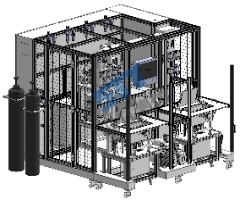
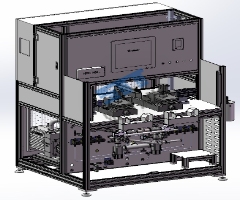
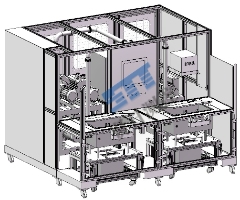
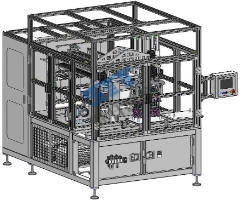
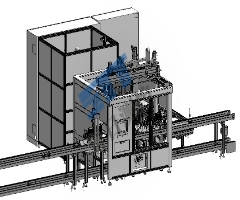
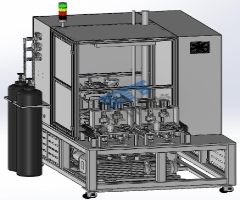
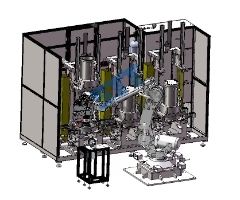
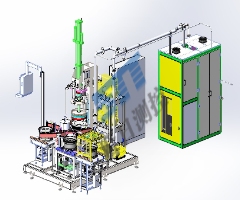
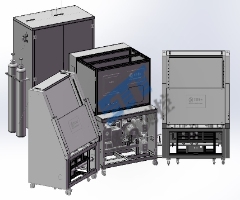
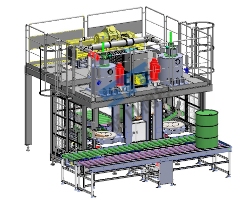
When selecting helium leak detection equipment, three core indicators matter most: detection accuracy, test pressure range, and cycle time. STT has been dedicated to the field of airtightness testing for nearly 20 years. STT helium leak detection systems cover the full range of core automotive air conditioning components, including heat exchangers, valves, piping, and compressors.
An automotive air conditioning system consists of core components such as the evaporator, condenser, compressor, expansion valve, and air conditioning piping. Any minor leak in any component will lead to a gradual loss of refrigerant, directly affecting cooling performance, increasing fuel/electricity consumption, and in severe cases, causing compressor damage or even system failure.
Traditional bubble testing or pressure decay testing has limited sensitivity and cannot meet the current stringent sealing requirements of the industry. Helium mass spectrometer leak detection uses helium as a tracer gas. With its small molecular size, strong penetration ability, and low background concentration, it enables extremely high-precision leak detection. Currently, the automotive air conditioning industry has widely adopted helium leak detection or halogen leak detection.
STT was founded in 2008 and possesses industry-leading technologies in vacuum technology, airtightness testing, helium leak detection, and automatic machine control systems, with more than 50 patents accumulated.
Core technical advantages include:
(1) High detection accuracy: equipment detection accuracy up to 10−8 mbar·L/s.
(2) Ultra-high pressure testing capability: has achieved 750bar (75MPa) ultra-high pressure helium mass spectrometry detection, known as the world's highest detection pressure.
(3) Intelligent data management: seamless integration of detection results with customer MES systems; test product data can be automatically stored and uploaded.
(4) Rich project implementation experience: nearly 20 years of helium leak detection project experience domestically and internationally.

STT Air Conditioning Pipe Fitting Helium Leak Detection System Parameters
Category | Technical Specification |
Helium Leak Detection Filling Pressure | ≤200bar (R744) |
Product Leak Rate | 1~5 g/a |
Cycle Time | 30 s/piece (customizable upon request) |
Helium Recovery Rate | ≥98% |

STT Air Conditioning Compressor Helium Leak Detection System Parameters
Category | Technical Specification |
Helium Leak Detection Filling Pressure | ≤200bar (R744); ≤20bar (R134a) |
Product Leak Rate | 2×10⁻⁵ mbar·L/s |
Cycle Time | 35 s/piece (customizable upon request) |
Helium Recovery Rate | ≥98% |

STT Helium Leak Detection System for A/C Evaporators & Condensers
Main causes of leakage: brazing defects (lack of fusion, pinholes, solder flow into flat tubes), fin-copper tube mutual melting, and poor brazing at header fitting joints.
Selection recommendation: Vacuum chamber helium leak detection; condenser pressure approx. 40bar, evaporator approx. 15bar; R744 requires high pressure resistance and precise pressure control to prevent thin-wall deformation.
Main causes of leakage: failure of shaft seal (dynamic seal) and housing static seal; under R744 high pressure, the shaft seal withstands 165bar discharge pressure and CO2 supercritical penetration.
Selection recommendation: Vacuum chamber helium leak detection, focusing on shaft seal verification; R744 models require filling pressure above 200 bar and overpressure protection; helium recovery rate ≥98% to control high-pressure testing costs.
Main causes of leakage: vibration-induced joint loosening, O-ring aging, and weld fatigue cracking; joint leakage accounts for over 89% of refrigerant charging failures.
Selection recommendation: Overall vacuum chamber leak detection; R744 piping requires filling pressure above 200bar; prioritize equipment supporting quick changeover to accommodate multiple pipe diameters.
Main causes of leakage: insufficient machining accuracy of valve body sealing surfaces, O-ring compression set under high pressure, and cross-leakage between multiple channels in integrated modules.
Selection recommendation: Multi-cavity vacuum chamber parallel detection, cycle time up to 10 s/piece; R744 valves require high pressure above 4MPa and safety protection; integrated modules require customized vacuum chambers matching channel layout.
Taking R134a refrigerant as an example, the current industry standard specifies a leak rate of 2-10 g/year under the corresponding leak test pressure. For evaporators and condensers, the requirement is typically no more than 2 g/year.
Both are recognized detection methods in the automotive air conditioning industry. Helium leak detection uses helium as a tracer gas, offering advantages such as higher sensitivity, faster detection speed, and no environmental pollution; halogen leak detection uses halogen refrigerant as a tracer gas, with relatively lower cost but slightly lower accuracy. Currently, high-end and new energy vehicle models widely adopt helium leak detection.
CO2 systems operate at extremely high pressures (up to 200bar), making it difficult for traditional helium leak detection equipment to meet the requirements. Equipment with ultra-high pressure testing capability is needed. STT has achieved 750bar (75MPa) ultra-high pressure helium mass spectrometry detection, providing reliable leak detection assurance for CO2 heat pump air conditioning systems.
Helium is an expensive rare gas, and the recovery rate directly determines the long-term operating cost of the equipment. The helium recovery rate of high-quality equipment in the industry is typically above 98%. STT's helium leak detection equipment achieves a technical closed loop in detection sensitivity and stability, ensuring detection accuracy while achieving efficient helium recovery, helping customers control long-term operating costs.